Samsung Electronics’ Industry-First LPCAMM Ushers in Future of Memory Modules

Source:

 
Samsung Electronics, a world leader in advanced memory technology, today announced that it has developed the industry’s first Low Power Compression Attached Memory Module (LPCAMM) form factor, which is expected to transform the DRAM1 market for PCs and laptops — and potentially even data centers. Samsung’s groundbreaking development for its 7.5 gigabits-per-second (Gbps) LPCAMM has completed system verification through Intel’s platform.


Historically, PCs and laptops have conventionally used LPDDR DRAM or DDR-based So-DIMMs.2 While LPDDR is compact, it’s permanently attached to the motherboard, making it challenging to replace during repairs or upgrades. On the other hand, So-DIMMs can be attached or detached easily but have limitations with performance and other physical features.
 
LPCAMM overcomes the shortcomings of both LPDDR and So-DIMMs, addressing the increased demand for more efficient yet compact devices. Being a detachable module, LPCAMM offers enhanced flexibility for PC and laptop manufacturers during the production process. Compared to So-DIMM, LPCAMM occupies up to 60% less space on the motherboard. This allows more efficient use of devices’ internal space while also improving performance by up to 50% and power efficiency by up to 70%.
 
LPDDR’s power-saving features have made it an attractive option for servers, since it could potentially improve total cost of operation (TCO) efficiency. However, using LPDDR can create operational difficulties such as the need to replace the entire motherboard when upgrading a server’s DRAM specifications. LPCAMM offers a solution to these challenges, creating significant potential for it to become the solution of choice for future data centers and servers.
 
“The energy efficiency and repairability advantages of LPCAMM make this new form factor a game changer in today’s PC market,” said Dr. Dimitrios Ziakas, Vice President of Memory & IO Technology at Intel. “We’re excited to be a part of the new standard enabling the client PC ecosystem and pave the path for future adoption and innovation in broader market segments.”
 
“With the growing demand in innovative memory solutions encompassing high performance, low power consumption and manufacturing flexibility across various fields, LPCAMM is expected to gain wide adoption in PCs, laptops and data centers,” said Yongcheol Bae, Executive Vice President of Memory Product Planning Team at Samsung Electronics. “Samsung is committed to actively pursuing opportunities to expand the LPCAMM solution market and collaborating closely with the industry to explore new applications for its use.”
 
LPCAMM is set to be tested using next-generation systems with major customers this year, and commercialization is planned for 2024.
 
To learn more about Samsung’s LPDDR products, please visit this address.
 
 
1 DRAM: Dynamic Random Access Memory
2 So-DIMM: Small outline Dual In-line Memory Module

HKSTP and Global Entrepreneurship Network Join Forces to Propel Innovators from 200 Markets to Success Across the World

Source:

HONG KONG SAR – Media OutReach – 26 September 2023 – The Hong Kong Science and Technology Parks Corporation (HKSTP), has joined forces with the Global Entrepreneurship Network (GEN) to lead aspiring innovators to global growth opportunities, and extend Hong Kong’s innovation ecosystem to GEN’s 200 markets around the world. HKSTP led a delegation to Australia and attending the Global Entrepreneurship Congress 2023 in Melbourne to explore collaboration opportunities and ignite market discovery initiatives.

< >GEN is a global community that fosters deeper cross-border collaboration and initiatives between entrepreneurs, investors, researchers, policy makers and entrepreneurial support organisations, to make it easier for anyone, anywhere to start and scale a business.

In July this year, John Lee, the Chief Executive of HKSAR, witnessed an MoU signed by Jonathan Ortmans, GEN Founder and President and Dr Sunny Chai, Chairman of HKSTP, committing the two parties to support entrepreneurship across ASEAN countries. To expedite the partnership, HKSTP joined GEC 2023 in Melbourne from 19-22 September with a delegation of fast-rising startups and business leaders from Hong Kong. The delegation highlighted Hong Kong’s world-class I&T ecosystem and potential for collaboration with their counterparts from GEN’s global network. The infusion of new talent and ventures will further boost Hong Kong’s mission towards an international I&T hub, creating opportunities for all innovators.

Ir Dr HL Yiu, Chief Corporate Development Officer of HKSTP, said, “HKSTP is committed to growing collaboration with the worldwide innovation community through our partnership with GEN. Entrepreneurs all face common challenges in the startup-to-scale-up journey and Hong Kong’s unique integrated innovation ecosystem provides funding, R&D, talent and go-to-market opportunities to the world. Both HKSTP and GEN share the same vision of fostering global innovation, collaborating and growing our respective ecosystems to reach new levels of success.”

The collaboration with GEN commits both parties to exchange programmes and activities to drive cross-border and cross-sector collaboration with a focus on Green Tech, Life Sciences, Advanced Manufacturing, SmartCity, Mobility, AI, and Fintech. GEN’s annual flagship events such as Global Entrepreneurship Week and the Global Entrepreneurship Congress, provide ideal platforms to expand Hong Kong’s I&T ecosystem to new markets.

“GEN is committed to connecting entrepreneurs to opportunities that help them start and scale,” said Jonathan Ortmans, Founder and President of the Global Entrepreneurship Network. “We are proud to be deepening collaboration with the HKSTP to advance the interest of both local and global founders.”

The HKSTP Australia delegation leveraged the Global Entrepreneurship Congress, which featured three days of actionable intelligence from various sectors. It gathered thousands of voices, from 200+ countries to participate in creating an inclusive global ecosystem by networking, learning and sharing. The delegation also met with representatives from the startup community, universities, government bodies and investors in Australia to further explore business and collaboration opportunities. In addition, the delegation shared experiences and exchanged ideas with Australian tech ventures who are interested in learning and exploring the Hong Kong market.

HKSTP also introduced its Market Discovery Programme in Hong Kong and shared details with enterprises interested in expanding into Hong Kong, the GBA and mainland China markets. The two-day intensive Market Discovery Programme will be held in Hong Kong on 6-7 November 2023, packed with seminars, tours and networking opportunities to connect entrepreneurs with experts, investors, corporate leaders as well as entrepreneurs with past success in expanding their business within the region. The by-invitation programme is free-of-charge and participants can experience a stay at the Science Park’s InnoCell smart living co-creation space to spark collaboration with Science Park’s I&T talents.

For details, please visit: www.hkstp.org/our-community/events-and-happenings/expand-in-china-with-confidence/

Hashtag: #HKSTP

The issuer is solely responsible for the content of this announcement.

– Published and distributed with permission of Media-Outreach.com.

Ukraine initiates WTO dispute complaints against Hungary, Poland and Slovak Republic

Source:

Ukraine claims the measures imposed by Hungary, Poland and the Slovak Republic appear to be inconsistent with various provisions under the WTO’s General Agreement on Tariffs and Trade 1994 and the Agreement on Agriculture.

Further information is available in documents WT/DS619/1, WT/DS620/1 and WT/DS621/1

What is a request for consultations?

The request for consultations formally initiates a dispute in the WTO. Consultations give the parties an opportunity to discuss the matter and to find a satisfactory solution without proceeding further with litigation. After 60 days, if consultations have failed to resolve the dispute, the complainant may request adjudication by a panel.

Share

WTO members address electronic commerce and technology transfer in final thematic session

Source:

Ambassador Usha Dwarka-Canabady of Mauritius, the facilitator of the Work Programme on Electronic Commerce, welcomed the exchanges which took place at the meeting. These included experience-sharing by members and discussions on technical assistance aimed at helping developing members bring technology to the forefront of their economic development.

The meeting included a presentation by Egypt on an African Group communication regarding the  role of transfer of technology in resilience building (WT/GC/W/888). 

Egypt, on behalf of the African Group, said technology transfer is a vital component of building economic resilience, with e-commerce serving as both a catalyst and a beneficiary of technology transfer.  The African Group has emphasized the need for collaborative efforts, openness and inclusivity in the discussion of trade, technology transfer and sustainable development, with the WTO having an important role in contributing to this process, Egypt said.

Around 20 members took the floor to comment on the African Group communication.

The meeting also heard from Cambodia regarding its communication, “E-commerce Readiness Development and Challenges: The case of Cambodia” (WT/GC/W/900), as well as a brief presentation from South Africa on a recent market inquiry by its Competition Commission.

In closing the meeting, Ambassador Dwarka-Canabady said from next month the Work Programme would start working on the convergence of issues in the eight thematic discussions held and find what areas of convergence could give members a basis to move forward and to make recommendations to the WTO’s 13th Ministerial Conference (MC13) to be held in Abu Dhabi in February 2024. 

Share

Plastics Pollution Dialogue makes progress on draft MC13 statement

Source:

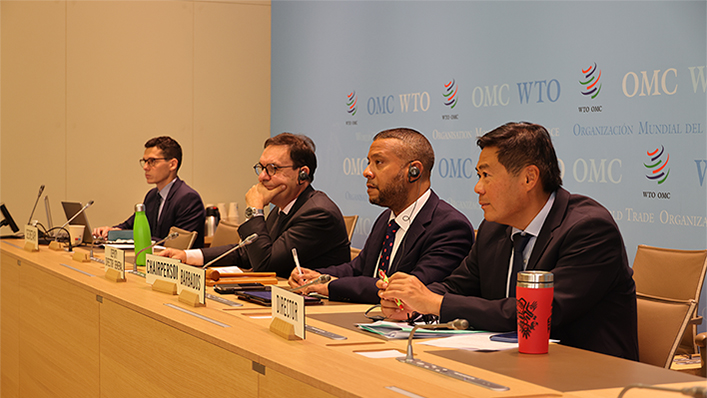
Ambassador Matthew Wilson from Barbados, Chair of the meeting, reiterated the challenging nature of the battle against plastics pollution. He pointed out that the world currently has 170 trillion plastic particles floating in the ocean, and by 2050, there will be more plastics than fish. In response, the WTO has taken action through the work of the Dialogue, as shown in the recent draft statement, he said.

Australia, representing the coordinators, introduced draft one of the MC13 statement. It expands upon the initial “draft zero” and outlines shared principles and various concrete actions related to trade aimed at reducing plastics pollution. The list of actions, including annexes (with details still to be developed), aims to reflect the discussions held over the past two years and to provide the foundation for collective efforts in addressing the challenge of plastics pollution.

Ecuador, a coordinator of the Dialogue, stressed the need to address plastics pollution throughout its lifecycle. Ecuador highlighted the importance of increased collaboration and synergy between the Dialogue and other international processes. These include ongoing negotiations led by the Intergovernmental Negotiating Committee on Plastic Pollution (INC) aimed at completing its work by the end of 2024 towards an international legally binding treaty on plastics pollution. Additionally, it noted the work of the World Customs Organization on amending the Harmonized System (HS) for traded goods and the existing regulations and guidelines of the Basel, Rotterdam and Stockholm conventions.

China, another coordinator of the Dialogue, emphasized the significance of a MC13 Ministerial Statement in harnessing trade to combat global plastics pollution. China encouraged further synergy between the Dialogue and the INC process, including enhancing coherence by defining key concepts such as “harmful and unnecessary plastics”.

Many co-sponsors of the Dialogue commended the progress made in the draft statement. They also offered various suggestions to enhance the draft, emphasizing their varied interests, including in promoting trade measures that would support non-plastic substitutes and alternatives, facilitate technology transfer, provide capacity building and funding to assist least developed countries and small island developing countries, address cross-border waste management, and adopt a balanced approach to addressing environmental, social and health concerns.

Additionally, some delegates noted the upcoming INC negotiation meeting in November and stressed the WTO’s unique position to contribute trade solutions to the process without precluding its outcomes. Several members shared the view that MC13 presented an excellent opportunity to send a strong signal to the INC and demonstrate the WTO’s strong commitment to implementing a future binding agreement on plastics pollution.

Representatives from international organizations and civil society also provided feedback on the draft statement, preceding the co-sponsors’ discussion, praising it as “commendable” work. They offered suggestions in various areas, notably adding a roadmap for future work, identifying specific products for trade reduction, securing a safe approach to plastics alternatives and substitutes to avoid solutions with regrettable consequences, addressing subsidies on plastics, and establishing a science-policy advisory panel to assess the safety of plastics substitutes.

In conclusion, the Chair expressed satisfaction with the feedback received during the meeting, affirming that it indicates the statement is on the right track, with expectations of more robust work ahead.

Next steps

Coordinators said that the annexes in the draft statement will remain a living document subject to periodic updates. They are currently in the process of preparing a factual report based on two surveys: one focused on trade-related measures relevant to plastics pollution reduction and another assessing plastics-related Aid for Trade needs. Additionally, they plan to revise the draft statement based on the feedback received thus far. Once finalized, both documents will be circulated among members and stakeholders.

The next meeting is scheduled for 16-17 November, following the November INC negotiation meeting, to facilitate more informed deliberations on the path forward.

More

Currently, 76 WTO members are participating in the Plastics Pollution Dialogue. Additional information about the Dialogue can be found on its dedicated webpage here.

Share

Working group on food security reviews coordinator’s report, discusses way forward

Source:

The coordinator’s report focused on four areas: access to international food markets; financing of food imports; agricultural and production resilience of least-developed and net food-importing developing countries (LDCs and NFIDCs); and horizontal issues. Several members expressed support for the report and its recommendations, highlighting its “balanced nature” and describing it as a strong foundation for reaching an agreement. Some other members considered that the report lacked sufficient emphasis on flexibilities for developing economies to address the immediate and short-term concerns arising from the food crisis.

As in previous meetings, the scope of the group’s work was raised, with some members believing that the group should examine all issues relating to food security challenges raised in the discussions and should not be prevented from proposing appropriate actions and recommendations, including to other bodies. Other members underlined that the scope of recommendations from the working group should be aligned to the work of the WTO and the mandate of the Committee on Agriculture in particular. It was also suggested that the report should acknowledge the entire discussion held in the working group since its inception in the form of a factual summary.

Feedback on written submissions

Members considered two written submissions received from Egypt and the African, Caribbean and Pacific (ACP) Group, which contain several specific suggestions for discussion and possible recommendations by the working group. The submission by Egypt was recently co-sponsored by Pakistan.

Egypt and Pakistan noted that their written contribution should be seen as a complement to the July report by the coordinator. The submission specifically highlights areas where the authors believe that additional flexibilities are required by LDCs and NFIDCs in order to address the food security challenges and their vulnerabilities.

The ACP Group’s submission focused, among other things, on global and regional supply chain bottlenecks, the implication of trade measures on food access, availability of finance and financing instruments, adequacy of global food stocks, and the need for technical and financial assistance to boost agricultural productivity and resilience. 

Suggestions dealing with enhanced transparency and improved notification practices received support from several members. On the role of WTO flexibilities, some members considered that robust agricultural infrastructure, public services, access to high-quality seeds and technology play a pivotal role in enhancing productivity and resilience. The importance of collaboration with relevant international organizations was also highlighted.  A few members also highlighted that the coordinator’s report and the two written submissions provide a good basis for the future work of the working group.

Proposal for a workshop

The Republic of Korea underscored the importance of seed development and suggested hosting a second workshop in October/November on this topic. The workshop would provide an opportunity to learn from the experiences of seed companies and would allow members and international organizations to present specific projects. This proposal received support from a number of members.

Next steps

Mr Tysdal said he will revise the coordinator’s report, taking into account the discussions at the meeting. He also invited members to reflect on how the food security work programme and the associated recommendations, once agreed, could feed into higher-level WTO processes and food security discussions at the upcoming 13th Ministerial Conference in February 2024.  He will share his future plans with the Committee on Agriculture at its meeting on 27-28 September.

Share

Members prepare for line-by-line negotiations on draft fisheries subsidies text in October

Source:

“This was a pivotal week for our process. In this week, we have turned in earnest toward text-based deliberations,” the chair said. “Members increasingly are engaging in the negotiations at full steam. This is great news, as it demonstrates the determination of everyone here to do everything possible to reach agreement by December.”

At the start of the week, the chair introduced, in a plenary meeting of the Negotiating Group on Rules, the draft text that he had circulated at the beginning of September. He indicated that the text, which draws from previous negotiating texts as well as proposals of members, is intended to serve as a common starting point for members’ discussions, and not as an approximation of a final outcome.

At the closing session of the fifth Fish Week, the chair said: “Given the clear mandate from you to treat the draft text as a starting point for the text-based negotiations, and your apparent readiness to engage in text-based negotiations, I believe it is high time to start collecting your specific suggestions for modifications to the text. I want to ask you to come well prepared to the next Fish Week in two weeks’ time with your sleeves rolled up and ready to elaborate your thoughts with specific textual ideas,” he said.

The next Fish Week will be held on 9-13 October 2023.

Deputy Director-General Angela Ellard welcomed members’ engagement, which she said “generated a very useful and constructive discussion this week, and has provided a great deal of relevant information for our work going forward.”

“Looking ahead, the upcoming Fish Week in October will be of great importance. It will provide us with an opportunity to hear your specific suggestions for amendments to the text, and how each of you sees how we arrive at landing zones on key issues,” DDG Ellard said.

Steady progress has been made to enter into force the Agreement on Fisheries Subsidies, with 43 formal acceptances now received from members, DDG Ellard said, reiterating Director-General Ngozi Okonjo-Iweala’s call for members to use the opportunity of the Senior Officials Meeting in October to deposit instruments.

DDG Ellard also updated members on the Fisheries Funding Mechanism, which was established in November 2022 to assist developing members and least-developed members implement the Agreement on Fisheries Subsidies.  DDG Ellard thanked members who have already contributed and disbursed to the fund almost CHF 5 million collectively, noting that there are additional commitments of almost another CHF 5 million which are expected to be received soon.

At the 12th Ministerial Conference, held on 12-17 June 2022 in Geneva, WTO members forged an historic Agreement on Fisheries Subsidies. The Agreement prohibits support for illegal, unreported and unregulated (IUU) fishing; bans support for fishing overfished stocks; and ends subsidies for fishing on the unregulated high seas. The Agreement will enter into force upon acceptance of its legal instrument by two-thirds of the membership. Under the Agreement, members further agreed to continue negotiations on outstanding issues, particularly on subsidies contributing to overcapacity and overfishing, which is the focus of the current draft text before members during the ongoing second wave of negotiations.

Share

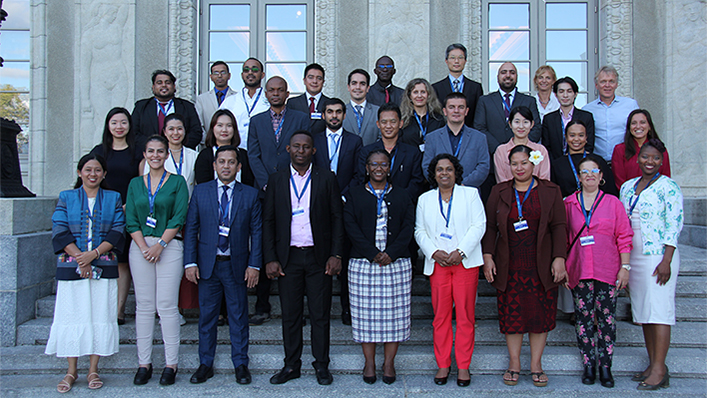
Advanced Course on Trade in Services for government officials concludes at WTO

Source:

The course was organized jointly by the WTO Trade in Services Division and the Institute for Training and Technical Cooperation.

Participants deepened their understanding of the main provisions of the General Agreement on Trade in Services (GATS) and analysed key features of recent regional trade agreements. They also explored recent trends in world services trade, the latest developments in measuring services trade, and various tools for trade policy analysis. Participants also discussed topical issues in services trade policy, such as e-commerce, investment facilitation and environmental services.

Mr Uzoma Desmond Idu-Odaiche, official from Nigeria’s Ministry of Industry, Trade and Investment, said: “This course allowed me to enhance my knowledge of trade in services and to familiarize myself with the main provisions in trade agreements. It has also equipped me with the tools needed to involve our private sector operators by educating them on the benefits of engagement in trading services.”

Ms Verónica Gabriela López Gilli, official from Argentina’s Ministry of Foreign Affairs, International Trade and Worship, said: “This course has helped me enhance my knowledge of emerging trends in services and equipped me with relevant tools for the tasks that I undertake in terms of services and investments.”

Mr Berisford Codd, who works in Belize’s Directorate General for Foreign Trade, said: “This course has allowed me to gain more insight into some of the latest negotiations that have been happening at the WTO on domestic services, service regulations and investment facilitation for development. ”

The course programme is available here.

The list of participants is below:

 Argentina

Mrs. Verónica Gabriela López Gilli
Director of Digital Economy, Services, Investment, Government Procurement and Intellectual Property
Ministry of Foreign Affairs, International Trade and Worship

Bangladesh

Mr. Mohammad Mashooqur Rahman Sikder
Deputy Secretary
Ministry of Commerce

Belize

Mr. Berisford Codd
Trade Economist II
Directorate General for Foreign Trade

Bhutan

Mr. Tashi Dorji
Chief Industries Officer
Ministry of Industry, Commerce and Employment

Bosnia and Herzegovina

Mr. Faris Godinjak
Senior Advisor for Foreign Trade Policy and Control
Ministry of Foreign Trade and Economic Relations

Chile

Mr. Juan Salvador Bonilla Ibañez
Adviser
Ministry of Foreign Affairs

China

Mrs. Zihan Yi
Second Secretary
Ministry of Commerce

Costa Rica

Mrs. Paola María López Ulate
Advisor for the Trade in Services and Digital Economy Division
Ministry of Foreign Trade

Côte d’Ivoire

Mr. Max-Bertin Djacore
Deputy Director of Bilateral and Regional Trade Cooperation
Ministry of Commerce, Industry and SMEs Promotion

Democratic Republic of the Congo

Mr. Julio Muya Kunda
Office Coordinator
Ministry of Foreign Trade

Ecuador

Mrs. Stephanie Gabriela Moreno Pacheco
Director of Trade in Services Negotiations and Double Taxation
Ministry of Production, Foreign Trade, Investments and Fisheries

Hong Kong, China

Ms. Ying Hin Wong
Trade Officer
Trade and Industry Department

India

Mr. Anuj Ojha
Deputy Director
Ministry of Commerce and Industry

Jordan

Mr. Mohammad Ghanem
Head of Trade Policy Department
Ministry of Industry, Trade and Supply

Lao People’s Democratic Republic

Mrs. Savankham Phongsavath
Trade Officer
Department of Foreign Trade Policy

Lesotho

Ms. Mahlompho Ayanda Selapane
Principal Trade Development Officer
Ministry of Trade, Industry, Business Development and Tourism

Mexico

Mr. Guillermo Medellin
Director
Ministry of Economy

Morocco

Mrs. Siham Belakbir
Executive
Ministry of Industry and Commerce

Myanmar

Mrs. Win Min Phyoe
Director
Ministry of Commerce

Namibia

Mrs. Diana Tjiposa
Deputy Director, Trade and Policy Negotiations
Ministry of Industrialisation and Trade

Nigeria

Mr. Uzoma Desmond Idu-Odaiche
Assistant Chief Commercial Officer
Ministry of Industry, Trade and Investment

Oman

Mr. Adnan Al-Shahi
Head of Industrial Cooperation Section
Ministry of Commerce, Industry and Investment Promotion

Philippines

Ms. Raissa Faminial
Senior Trade and Industry Development Specialist
Department of Trade and Industry

Samoa

Mrs. Keity Fereita Siniva Tuiloma
Principal Project Management Officer
Ministry of Commerce, Industry and Labour

Singapore

Mr. Shawn Teck Choon Lui
Senior Assistant Director
Ministry of Trade and Industry

Sri Lanka

Mrs. Dona Abegunawardana Seevali Wijewantha
Deputy Director of Commerce
Ministy of Trade, Commerce and Food Security

Chinese Taipei

Mr. Yii-Feng Chang
Deputy Assistant Trade Representative
Office of Trade Negotiations

Thailand

Ms. Nuntirat Klaiklueng
Trade Officer
Ministry of Commerce

United Arab Emirates

Mr. Abdulla Aldhuhoori
Economic Researcher
Ministry of Economy

Share

Audio: Chairperson’s concluding remarks

Source:

The following documents are available:

Secretariat report

A detailed report written independently by the WTO Secretariat.

Government report

A policy statement by the government of the member under review.

From the meeting

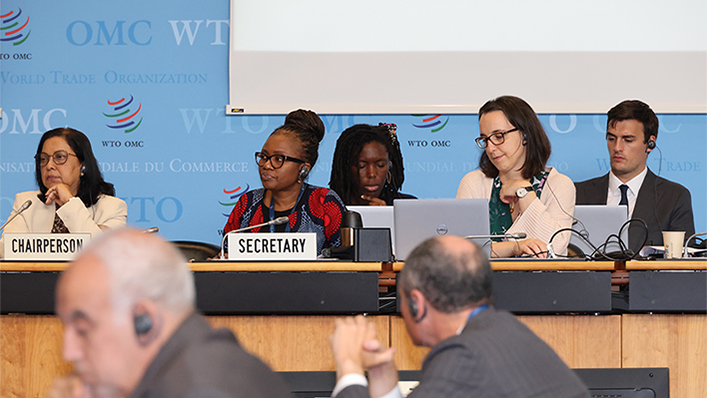
The Secretariat and Government reports are discussed by the WTO’s full membership in the Trade Policy Review Body (TPRB).

Background

Trade Policy Reviews are an exercise, mandated in the WTO agreements, in which member countries’ trade and related policies are examined and evaluated at regular intervals. Significant developments that may have an impact on the global trading system are also monitored. All WTO members are subject to review, with the frequency of review varying according to their share of world trade.

Share